
Most traditional recruiting software waits to be told what to do. A recruiter constructs a Boolean search string, exports the shortlist into an outbound messaging tool, drafts the email sequence, monitors the inbox for replies, and manually coordinates preliminary phone screens. While individual software tools execute each isolated step rapidly, they do nothing in between. That operational void is where valuable recruiting hours disappear.
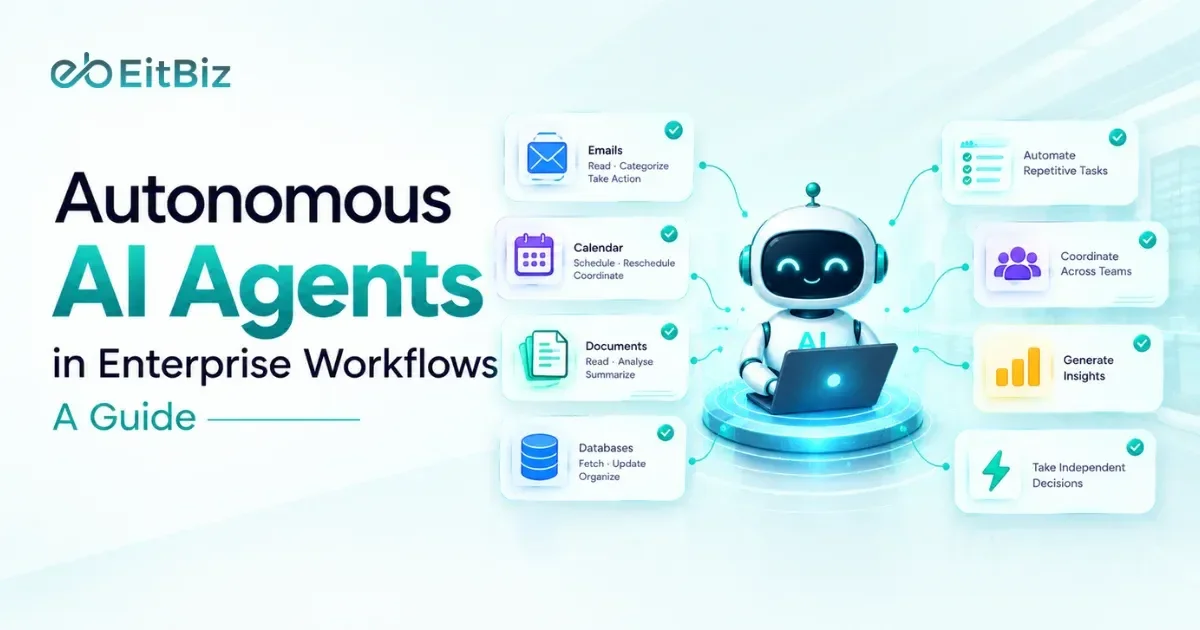
Autonomous AI agents target that gap directly. Instead of returning a raw query result and halting, an agent pursues an established objective across multiple sequential phases—carrying context forward and systematically escalating exceptions it cannot resolve. In talent acquisition, this transforms a passive deliverable of “here are 200 matching candidate profiles” into an actionable outcome: “here are 11 qualified candidates who were contacted, engaged, passed preliminary knockout criteria, and confirmed their availability within the required compensation band.“
What Separates an AI Agent from a Recruiting Chatbot?
The core distinction does not lie in conversational fluidity; it lies in autonomous execution capability.
A chatbot generates static output when prompted—such as a job description, resume summary, or outreach template—which requires human intervention to deploy. Conversely, an autonomous agent operates with a delegated objective and a permitted action suite. It autonomously sequences operations until the goal is achieved or it encounters a predetermined boundary requiring human review.
Three foundational properties enable this autonomy:
-
Statefulness: The agent maintains contextual memory across sessions, ensuring it never re-contacts a candidate who opted out or re-screens a profile previously rejected.
-
Direct Tool Integration: The agent reads and writes directly to native software ecosystems—such as Applicant Tracking Systems (ATS), corporate email clients, calendars, and VoIP channels—eliminating manual data entry.
-
Defined Escalation Protocols: The agent recognizes the boundaries of its decision-making authority and automatically routes edge cases to human recruiters.
Where Agents Integrate Across the Hiring Workflow
Agentic recruiting operates most effectively not as completely unchecked automation, but as a series of auditable, modular tasks separated by human verification checkpoints.
| Workflow Stage | Autonomous Agent Execution | Human Recruiter Responsibility |
| Requisition Intake | Parses job specs into structured search criteria and sourcing boolean queries | Validates non-negotiable requirements, pay bands, and compliance rules |
| Candidate Sourcing | Searches internal ATS/CRM records first, expands to external talent pools, deduplicates records | Approves search repositories, target companies, and the finalized candidate shortlist |
| Outreach & Nurturing | Deploys personalized, multi-channel messaging, handles common replies, manages opt-outs | Approves brand messaging templates, communication rules, and channel permissions |
| Preliminary Screening | Conducts initial qualification against a standardized rubric, records transcripts, generates scores | Defines evaluation rubrics, sets passing thresholds, and conducts exception reviews |
| ATS Handoff | Generates structured candidate dossiers and logs updates directly into the ATS or VMS | Conducts live behavioral interviews, manages client submissions, and makes hiring decisions |
The primary efficiency emerges at the transition boundaries: sourced candidates flow seamlessly into outreach and preliminary screening without requiring intermediate spreadsheet exports. Prioritizing internal ATS and CRM data before spending credits on external talent databases minimizes procurement waste and accelerates re-engagement with qualified, familiar candidates.
Capacity Pressures Driving Enterprise Adoption
The enterprise business case for talent acquisition automation has transitioned from direct cost reduction to operational capacity management. Recent industry data reflects mounting workload pressures:
-
Escalating Requisitions: Benchmark data indicates large corporate talent teams experienced a 67% increase in median requisitions managed per recruiter, even as average time-to-fill requirements dropped to 39 calendar days.
-
Reinvestment in High-Touch Evaluation: Surveys across talent professionals show that teams deploying generative AI save roughly 20% of their typical work week. Rather than reducing headcount, organizations reinvest 35% of this reclaimed bandwidth into candidate screening and 26% into rigorous skills evaluation.
-
Accelerating Agentic Deployments: Over 80% of talent leaders plan to incorporate AI into daily workflows, with more than half preparing to deploy autonomous execution agents.
Rather than stacking isolated point solutions that fragment focus, talent leaders increasingly favor unified agentic frameworks that consolidate sourcing, candidate communication, and interview scheduling under a singular operational model.
Common Failure Modes and Operational Limitations
Autonomous agents are susceptible to specific operational breakdowns that cannot be resolved solely by upgrading baseline language models:
-
Stale Source Records: An agent depends on the hygiene of the connected ATS. Expired contact information, outdated job titles, and unverified work authorizations will result in flawed candidate shortlists.
-
Contact Deliverability Rates: Surfacing a candidate profile is fundamentally different from establishing direct contact. Because contact enrichment accuracy varies significantly by geography, teams must track deliverable outreach rates rather than raw profile counts.
-
Opaque Scoring Algorithms: Single, unweighted fit scores cannot be audited. Compliant implementations must expose granular question rubrics, candidate responses, and identified assessment gaps.
-
Regulatory and Compliance Guardrails: Strict employment regulations require transparency in automated candidate evaluation. Frameworks such as the European Union AI Act categorize automated CV-sorting tools as high-risk systems, while municipal mandates like New York City’s Local Law 144 enforce annual bias audits and explicit candidate notices.
Deploying Agents with Human-in-the-Loop Governance
Organizations can scale agentic workflows securely by adhering to practical control standards:
-
Automate Single, Low-Risk Workflows First: Begin by automating repetitive, top-of-funnel administrative tasks—such as high-volume initial sourcing and basic touchpoint scheduling—where operational errors do not compromise final hiring decisions.
-
Establish Mandatory Human Checkpoints: Enforce human verification gates before committing to sensitive milestones, including criteria authorization, outbound message approval, and candidate submission.
-
Calibrate Evaluation Rubrics Early: Vague instructions yield unpredictable screening results. Standardize candidate evaluation metrics before activating autonomous screening filters.
-
Maintain Auditable Logs: Document every query parameter, screening response, and human approval decision to support operational debugging and statutory bias audits.
-
Evaluate Outcome-Driven Metrics: Measure operational success by tracking qualified candidate interviews per recruiter per week, rather than raw candidate profiles discovered.
Frequently Asked Questions
Do autonomous AI agents replace human recruiters?
No. Agents handle repetitive administrative orchestration. Strategic talent alignment, stakeholder relationships, nuanced interpersonal evaluations, and final employment offers remain strictly within human purview.
How does an autonomous recruiting agent differ from an ATS?
An Applicant Tracking System functions as a centralized database of record. An autonomous agent serves as an active execution layer that queries, updates, and acts upon that underlying data within authorized parameters.
What should talent teams evaluate before procuring an agent platform?
Teams should request live demonstrations using existing requisitions rather than synthetic vendor scripts. Inquire about actual contact delivery rates, native ATS write-back integrations, and the specific licensing drivers behind platform costs.