
For nearly two decades, data center sustainability has been evaluated almost exclusively through a single metric: Power Usage Effectiveness (PUE). Introduced by The Green Grid and codified under ISO/IEC 30134-2, PUE measures how efficiently a facility delivers electricity to its computing hardware compared to supporting infrastructure like fans, transformers, and chillers. However, as the rapid deployment of high-density artificial intelligence clusters drives rack power densities from 10 kilowatts to over 100 kilowatts, operators face an acute thermodynamic trade-off between electrical draw and water consumption.
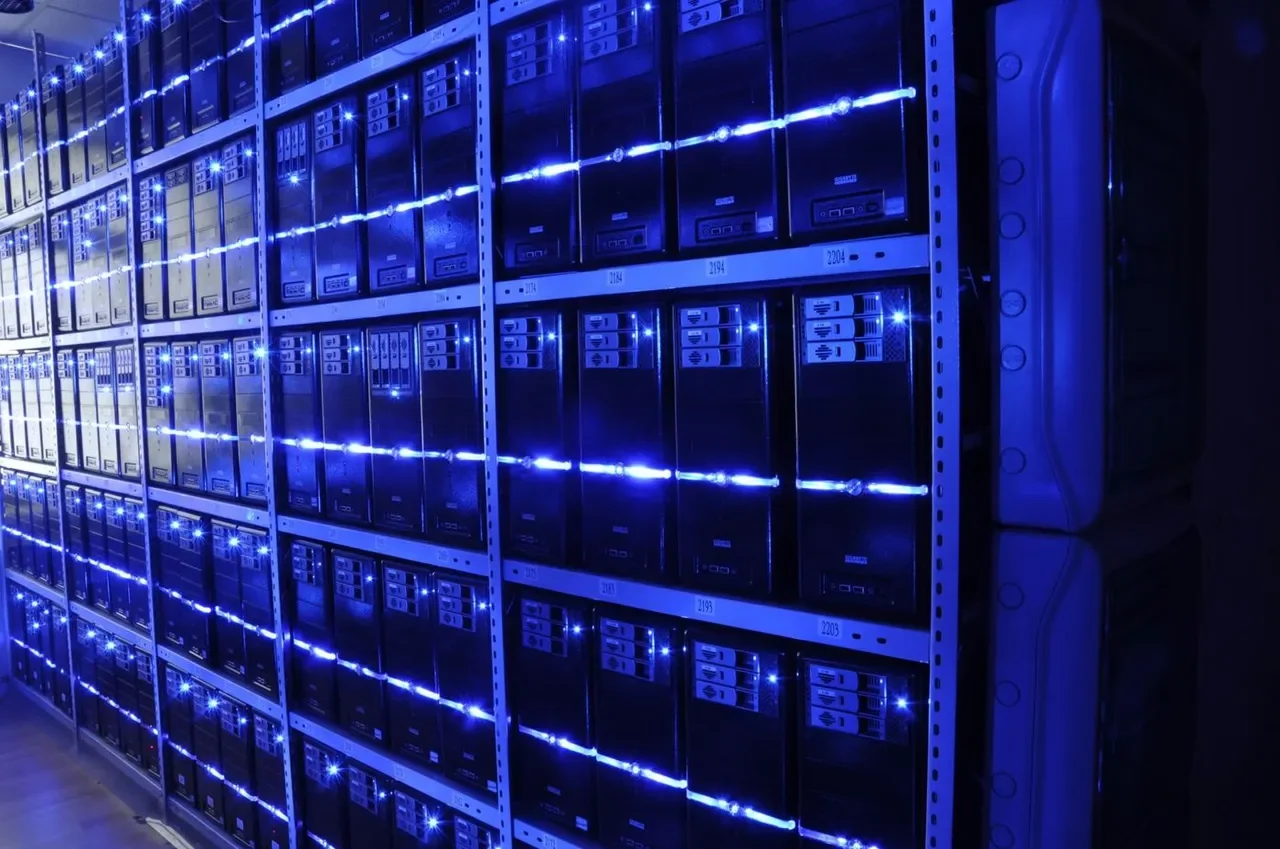
To reduce power consumption and report artificially low PUE scores, many hyperscale facilities have relied on evaporative cooling towers, which consume millions of gallons of potable water daily to dissipate heat. In drought-stressed watersheds across the American Southwest, Northern Virginia, and Western Europe, this intensive water extraction has triggered intense regulatory scrutiny from municipal utilities. In response, enterprise operators and cloud providers are expanding environmental disclosures to report Water Usage Effectiveness (WUE) alongside electrical benchmarks, exposing the hidden resource trade-offs inherent in modern computing infrastructure.
Thermal Management Matrix: Cooling Topologies and Resource Trade-offs
| Cooling Architecture | Typical Operating PUE | Direct On-Site Water Draw (WUE) | Primary Heat Rejection Mechanism | Municipal Watershed Impact | Best Density Application |
| Open Evaporative Cooling Towers | Low ($1.10\text{–}1.20$) | High ($1.50\text{–}3.00\,\text{L/kWh}$) | Latent heat of vaporization via ambient air evaporation | Heavy potable water draw; high mineral blowdown wastewater discharge | Legacy enterprise; moderate density ($5\text{–}15\,\text{kW/rack}$) |
| Air-Cooled Mechanical Chillers | High ($1.35\text{–}1.60$) | Zero Direct ($0.00\,\text{L/kWh}$) | Closed-loop refrigeration cycles with high-velocity condenser fans | Negligible local water demand; elevated grid electrical consumption | Arid regions; water-stressed municipal zones ($<20\,\text{kW/rack}$) |
| Direct Evaporative / Adiabatic Economizers | Moderate ($1.15\text{–}1.25$) | Seasonal ($0.50\text{–}1.20\,\text{L/kWh}$) | Free air cooling switched to wet-pad evaporation during peak ambient heat | Moderate seasonal demand during summer peak periods | Temperate climates with low wet-bulb temperatures |
| Direct-to-Chip (D2C) Liquid Loops | Very Low ($1.05\text{–}1.15$) | Minimal to Zero ($<0.20\,\text{L/kWh}$) | Closed-loop dielectric or treated water circulated over copper cold plates | Low on-site water usage; rejects heat to external dry fluid coolers | High-performance AI/ML clusters ($40\text{–}100+\,\text{kW/rack}$) |
| Two-Phase Immersion Cooling | Ultra Low ($1.02\text{–}1.08$) | Zero Direct ($0.00\,\text{L/kWh}$) | Phase-change boiling and condensation of fluorochemical liquid | Zero municipal water impact; high chemical capital cost | Extreme density supercomputing ($>100\,\text{kW/rack}$) |
1. The Energy-Water Nexus: The Mechanics of PUE vs. WUE
The relationship between power consumption and water utilization in thermal management represents a coupled thermodynamic balance:
                          [ Computing Heat Load (kW) ]
                                       │
                ┌──────────────────────┴──────────────────────┐
                ▼                                             ▼
  [ Thermodynamic Route A: Mechanical ]         [ Thermodynamic Route B: Evaporative ]
   Refrigerant compressors + Condenser fans      Cooling towers + Latent water evaporation
   Outcome: High Electricity (Elevated PUE)     Outcome: Low Electricity (Optimized PUE)
   Water Impact: Near-Zero Direct Site Draw      Water Impact: High Water Volume (Elevated WUE)
-
Quantifying Water Usage Effectiveness (WUE): Standardized under ISO/IEC 30134-9, WUE calculates the ratio between annual site water consumption and IT equipment energy usage:
$$\text{WUE} = \frac{\text{Annual Water Footprint (Liters)}}{\text{IT Equipment Energy (kWh)}}$$
-
The PUE Optimization Penalty: Standard evaporative cooling towers operate by spraying water into a moving airstream. The evaporation of approximately one gallon of water dissipates roughly 8,000 to 9,000 BTUs of thermal energy. Because evaporation lowers water loop temperatures without requiring energy-intensive mechanical compressors, operators frequently use evaporative cycles to drive facility PUE down toward 1.15. However, this mechanical efficiency comes at the cost of consuming hundreds of millions of gallons of local water annually.
-
Scope 1 vs. Scope 2 Water Consumption: Reporting frameworks increasingly separate on-site consumption (Scope 1 water evaporated via towers) from off-site consumption (Scope 2 water consumed at thermal power plants to generate grid electricity). An air-cooled facility with zero on-site water draw may still drive water consumption upstream if its high electricity demand is supplied by coal, natural gas, or nuclear power stations using open-loop steam cooling.
2. Cooling Tower Mechanics: Evaporation, Drift, and Blowdown
Understanding data center water consumption requires examining the internal operational stages of industrial cooling systems:
-
Evaporative Dissipation: Warm water circulating from the data hall’s heat exchangers is sprayed over fill media inside the tower. Ambient air pulled by exhaust fans induces evaporation, shedding sensible heat into the atmosphere as water vapor.
-
Cycles of Concentration (CoC): As pure water ($H_2O$) evaporates, dissolved minerals, silica, and calcium carbonates remain behind in the basin. Operators express water mineral concentration through Cycles of Concentration (typically ranging from $3\times\text{ to }7\times$). Higher cycles reduce fresh water consumption but increase the risk of mineral scaling on heat exchangers.
-
Blowdown and Discharge: Once mineral concentrations reach threshold limits that threaten piping with scale or corrosion, a portion of the mineral-heavy water must be drained (the blowdown or bleed-off) and discharged into municipal wastewater sewers, while fresh city water (makeup water) is introduced.
-
Chemical Treatment Requirements: Open evaporative basins require biocides, scale inhibitors, and corrosion passivators to prevent mineral deposition and eliminate pathogen growth, specifically Legionella pneumophila bacteria.
3. High-Density Computing: The Catalyst for Direct-to-Chip Cooling
The transition toward high-density computing architectures for generative AI models is rendering air-based heat extraction physically obsolete:
-
The Air Cooling Thermal Limit: Traditional Computer Room Air Handling (CRAH) units depend on pushing chilled air through perforated floor tiles into enclosed cold aisles. When rack power exceeds 30 to 40 kilowatts, the volume and velocity of air required to cool server chassis creates extreme fan power parasitic loads and localized thermal hotspots.
-
Liquid-to-Chip Cold Plates: Direct liquid cooling routes treated water, propylene glycol, or dielectric fluids directly through micro-channel copper cold plates mechanically clamped to central processing units (CPUs) and graphics processing units (GPUs). Because liquid carries heat over 3,000 times more efficiently than air by volume, fluid loops extract thermal energy directly at the silicon die.
-
Transition to Closed-Loop Dry Coolers: Because liquid cold plates operate effectively with supply fluid temperatures between $30^\circ\text{C}\text{ and }45^\circ\text{C}$ (well above ambient outdoor dry-bulb temperatures in most regions), facilities can reject heat directly to outdoor air using closed-loop dry fluid coolers without requiring open evaporative cooling towers. This transition drives on-site WUE close to zero while preserving low PUE metrics.
4. Municipal Constraints, Regulation, and Circular Water Systems
As data center construction clusters around primary fiber-optic trunk routes, municipal water districts are enacting binding constraints on computational water consumption:
-
Banning Potable Water in Industrial Cooling: Municipalities in high-density data corridors are increasingly prohibiting the use of treated drinking water for industrial evaporative cooling, requiring data center developers to fund dedicated secondary infrastructure.
-
Reclaimed Wastewater (Treated Effluent): Leading operators are adapting cooling loops to utilize non-potable tertiary-treated municipal wastewater (reclaimed effluent or greywater). While this preserves local drinking reservoirs, it requires on-site membrane bioreactors and specialized corrosion-resistant titanium heat exchangers to handle elevated chlorides and suspended organic solids.
-
On-Site Reverse Osmosis (RO) Recycling: Advanced data center campuses capture cooling tower blowdown, pass the mineral-heavy brine through high-pressure reverse osmosis membranes, and return purified water back to the primary cooling loop, elevating Cycles of Concentration and reducing total utility intake by up to 35 percent.
5. Standardizing Disclosure: Toward Transparent Environmental Reporting
The integration of water reporting alongside energy consumption shifts facility design from isolated efficiency targets toward balanced environmental optimization:
-
Dual-Index Auditing: Enterprise environmental, social, and governance (ESG) reporting must disclose annualized PUE and WUE concurrently, accompanied by localized hydrological stress indices (such as the World Resources Institute Aqueduct Water Risk Atlas).
-
Climate-Indexed Operational Profiles: Facilities in cool, humid climates should leverage free-air economization for the majority of the year, reserving evaporative assist only for extreme peak summer temperature excursions.
-
Hardware-Coupled Heat Reuse: Modern liquid-cooled architectures allow data center operators to export waste thermal energy ($45^\circ\text{C}\text{ to }60^\circ\text{C}$ warm-water discharge) directly into municipal district heating networks, commercial greenhouses, or industrial facilities, converting waste heat into a community utility.
Balancing high-density digital computation with environmental stewardship requires evaluating energy and water consumption as an interconnected system. By reporting standardized Water Usage Effectiveness figures alongside electrical benchmarks, transitioning toward closed-loop liquid cooling, and utilizing reclaimed water resources, data center operators ensure that expansion does not come at the expense of regional watershed stability.