
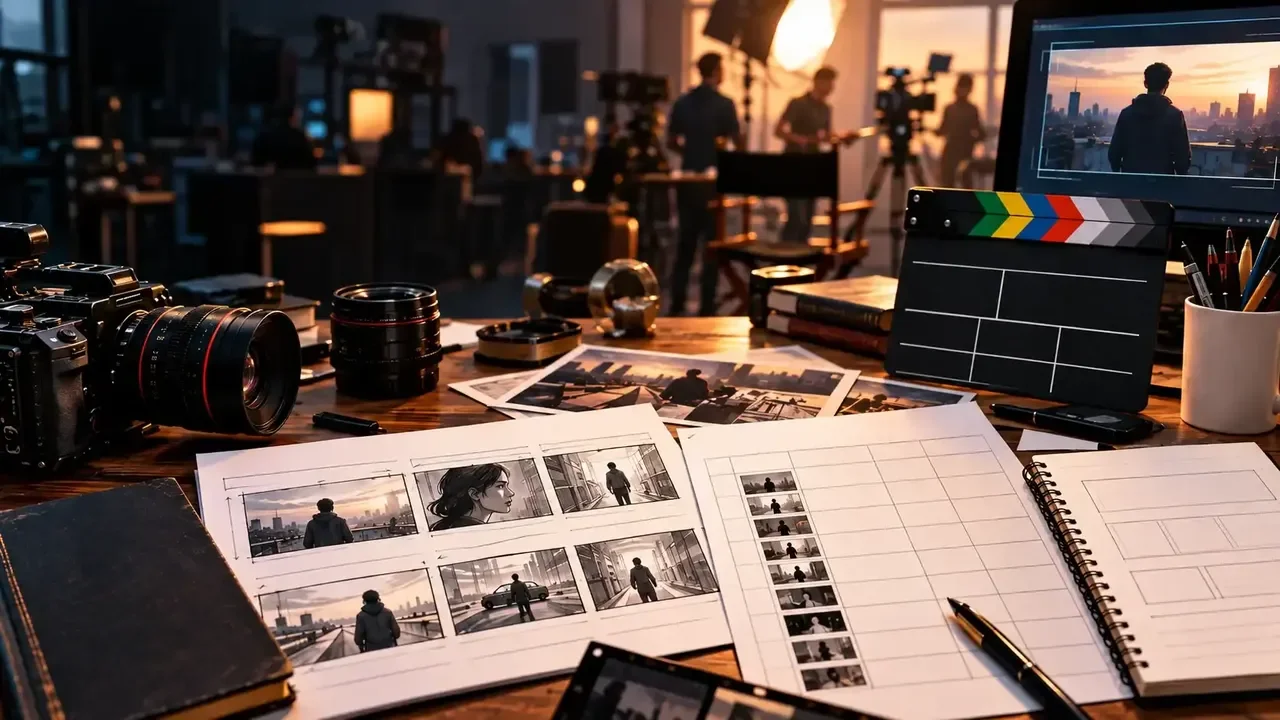
An AI video model like Seedance works best in a film teaser when it builds atmosphere around a real performance rather than replacing it. In this proposed exercise, Seedance generates quiet shots of an empty dressing room, and a filmed actor’s single gesture delivers the human payoff.
The idea is a short fictional teaser: a chair, a mirror and a coat by the door, belonging to an invented character about to make a first entrance. Seedance can turn a written brief and reference images into motion, which makes it handy for testing how light and camera movement change a scene.
The Shot Plan
- The room. Seedance from a dressed-room photo: a slow approach toward the chair as the lamp warms the coat.
- The program. Seedance from a close photo: a fixed camera, with one paper corner lifting in a draft.
- Corridor light. Seedance from a door-ajar reference: a strip of brighter light enters.
- The gesture. Filmed with a consenting actor: a hand reaches for the coat.
- Title. Back to the empty chair for a still frame with the title card.
Preparing the References
Start with a photo of a room dressed for the exercise, a simple floor plan and original music. Choose objects that hint at the character: a folded program, shoes lined up under the table. Keep readable production details off the program.
Place the camera near the doorway looking at the chair and mirror, so viewers feel they’ve arrived just before the character. Angle the mirror so it never needs to reflect the camera or an unseen person.
Writing Restrained Briefs
Ask for one small movement per shot. Requesting a turning chair, flickering mirror and opening door at once invites artefacts. A sample brief: “Close view of a folded cream program on a wooden dressing-room table, matching the reference. One corner lifts gently in a faint draft and settles. Keep the paper and surrounding objects stable. Warm side light, fixed camera.”
For the corridor shot, supply a separate reference with the door already open rather than asking the model to invent a hallway. If a result widens the doorway or moves the coat, simplify and regenerate. The room must stay the same room.
Where the Actor Comes In
Film the hand reaching for the coat, or shoes crossing the threshold, with a real, consenting performer. Match light direction and coat colour so the cut feels natural. The actor’s hesitation is the teaser’s most specific detail, and AI shouldn’t replace it.
Sound and Editing
Open with a sparse musical phrase, room tone and a shoe on the floor, using original or licensed audio. Let the first stronger musical entrance meet the corridor light. Skip impact sounds on every cut; silence builds tension. Trim clips where a movement settles, so rhythm follows visible action.
Finishing Touches
Place the title over a clean area after the character leaves. For vertical versions, keep the doorway and chair in frame, or prepare a separate composition. And label generated shots internally, so collaborators always know which footage is AI and which was filmed.
Comments
No approved comments yet. Join the conversation below.