
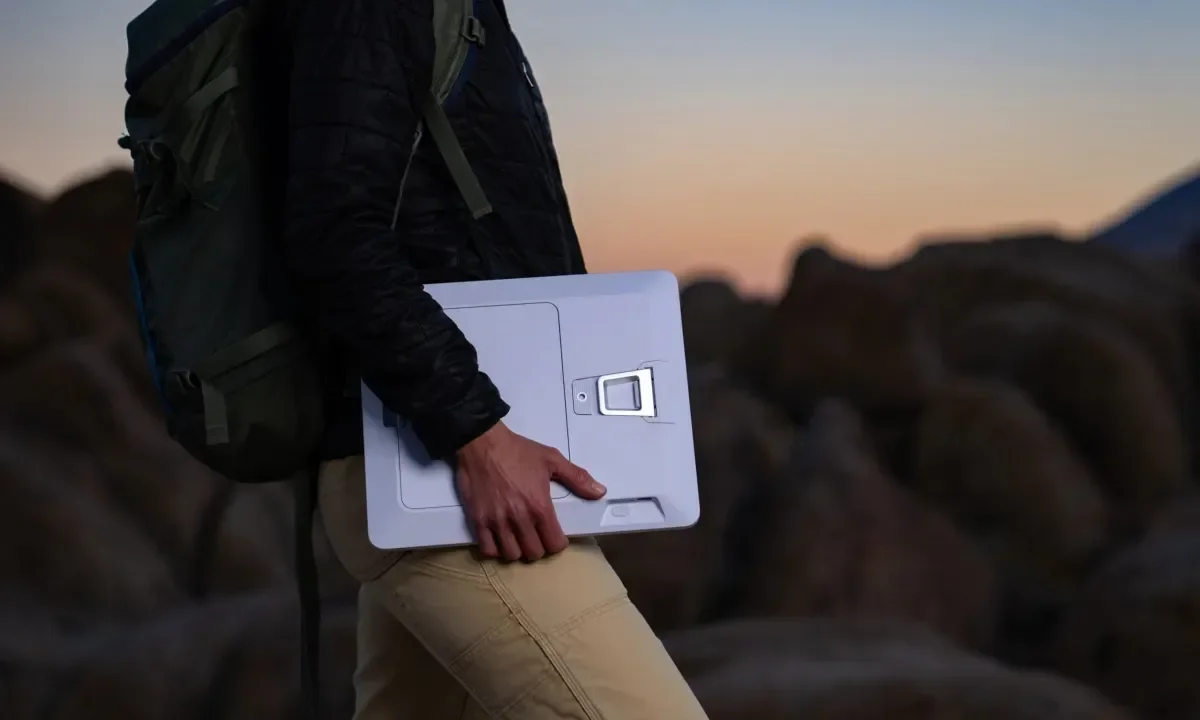
SpaceX unveiled the Starlink Mini 2 on November 10, 2026, adding a removable 71Wh battery rated for up to 4.5 hours of use, Wi-Fi 6, an IP67 rating and a slimmer 23.1mm body. It is the first Starlink Mini that can run without external power, fixing the biggest complaint about the original. The new model keeps the compact, packable format that made the Mini popular with travellers, while adding features aimed squarely at outdoor and off-grid use.
Availability So Far
Preorders opened in a limited US rollout for selected invited customers. SpaceX has not said when wider sales or international orders will begin. Firmware references to a battery-equipped Mini had surfaced as early as May 2026.
Some invited customers have reportedly been offered a $999 bundle combining the dish with a year of Roam Unlimited service. SpaceX has not confirmed standalone retail pricing.
Key Specifications
| Feature | Starlink Mini 2 |
|---|---|
| Battery | Removable 71Wh, quick-release, up to 4.5 hours |
| External power | USB-C; 60W charger and 3m cable included |
| Wi-Fi | Wi-Fi 6, coverage up to about 1,800 sq ft |
| Durability | IP67 water and dust resistance |
| Thickness | 23.1mm |
| Weight | 1.6kg with battery and kickstand |
| Extras | Physical power button, battery LEDs, tripod mount |
Why the Battery Changes Things
The original Mini was compact enough for a backpack, but it needed constant power from a vehicle, power station or power bank. The Mini 2’s battery clips onto the back of the dish with a quick-release mechanism, so users can carry a spare and swap it in the field without tools. One battery can charge at camp or in a vehicle while the other runs the dish. When both are flat, USB-C power keeps it online.
The IP67 rating, which the first Mini lacked, makes it far better suited to rain and dust. The wider Wi-Fi 6 coverage helps when connecting a large vehicle, a base camp or a small remote worksite.
How Starlink Works
Starlink uses thousands of low-Earth orbit satellites between about 340 and 1,200 kilometres up, far closer than traditional geostationary satellites at around 35,000 kilometres. That gives latency close to standard broadband, good enough for video calls and gaming. The service runs in more than 100 countries and territories.
Who Should Consider It
Using a dish at changing locations requires the Roam service plan, which the Mini 2 is designed for. Campers, overlanders, boaters, field researchers and remote workers who move often stand to gain the most. If you already own the original Mini and mostly use it in a vehicle with steady power, the upgrade is less urgent. Wait for confirmed pricing and wider availability before deciding, and check coverage maps for the places you actually travel.
Comments
No approved comments yet. Join the conversation below.